Wednesday, 30 May 2007

Reef Check Announces new BUDDY BREATHING Program


Dive Shops join with Reef Check to support volunteer divers by providing FREE AIR!

In a major initiative announced today by Reef Check, California’s dive community has joined together to help support volunteers working to protect our nearshore reef ecosystems. Top dive shops across the state have agreed to provide free air to Reef Check divers as part of the Reef Check “Buddy Breathing” program. Divers who show their NAUI or PADI Reef Check EcoDiver specialty card will receive free air fills for Reef Check survey and monitoring work.

“We’re excited to see dive shop operators coming together to help give back to the environment by supporting our volunteer divers as they protect our rocky reefs” said Reef Check California Director Dr. Craig Shuman. “Our monitoring results are helping to educate everyone about the status of our valuable nearshore resources so that they can be better managed and we’re grateful to our partners in the dive industry for such generous help. Pioneering dive shops that have joined together to support the “Buddy Breathing” program include:

  • California Diving Company - Santa Clarita, CA (www.californiadivingcompany.com)
  • Captain Frog Scuba – Bakersfield, CA (www.captainfrogscuba.com)
  • Ocean Adventure Dive Company – Venice, CA (oceanadventuresdiveco.com)
  • OEX Dive and Kayak Centers –La Jolla, Mission Bay and Pt. Loma CA www.oeexpress.com)
  • Peace Scuba – Ventura, CA (www.peaceboat.com)
  • Reef Seekers – Beverly Hills, CA (www.reefseekers.com)
  • San Diego Underwater Adventures – San Diego, CA (www.sduadivers.com)
  • Scuba Haus – Santa Monica, CA (www.scubahaus.com)
  • Scuba Schools of America (nitrox included) – Montclair, CA (www.scubaschoolsofamerica.com)
  • Xtreme Scuba (nitrox included) – Ventura, CA (www.xtremescuba.com)

California’s reefs look very different than they did 30 years ago. Abalone are almost gone in Southern California and big fish have become scarce while our kelp forests have become sparsely inhabited. Working together, divers can unite and bring back this valuable resource. To that end, the Reef Check Foundation plans to train over 500 divers in the next 3 years to help establish California’s first state-wide community based monitoring network. Divers are already being trained but we still need your help. For more information and to get involved, go to www.reefcheck.org/california/index.asp.

Founded in 1997, the Reef Check Foundation (a 501 (c) (3) nonprofit organization), was established to reverse the coral reef crisis and promote the protection and rehabilitation of reefs on a global scale. The Reef Check California program was founded in 2006. Reef Check programs provide ecologically sound and economically sustainable solutions for local businesses and communities, and thousands of volunteers participate in its programs in over 80 countries worldwide.

For more information, visit Reef Check at Scuba Show in Long Beach June 2nd and 3rd in Booth 727 or online at www.reefcheck.org

Whales & Dolphins (Smithsonian Handbooks)

A beautifully illustrated guide to every species of whale, dolphin and porpoise. Covers their identification, evolution, biology, behaviour, reproduction and social lives. Includes tips on how and where to watch whales, dolphins and porpoises, and information on their conservation.

From the great illustrations and quick-reference title bar that includes taxonomic, habitat and population information, to the range maps and behavioral information, this book was such a steal. I received this book shortly before starting cetacean surveys in the south pacific and it was an incredible source of information.

I have used many field guides and, although I never tested its 'water-proofness", it is simultaneously concise yet complete. It not only gives identification keys for individual species, but also keys to identifying individual animals. If you are a teacher, student, biologist or enthusiast, get it, wherever you are in the world.

Monday, 28 May 2007

EU Proposes Ways To Make Dismantling Old Ships Safer for Humans, Environment


May 23, 2007 — By Associated Press

BRUSSELS, Belgium -- The European Union should play a more active role in halting the scrapping of old ships in dangerous and polluting conditions in Asia, a practice likely to worsen as single-hull tankers are phased out in favor of safer double-hulled vessels, the top EU environment official said Wednesday.

EU Environment Commissioner Stavros Dimas said the bloc should lead efforts, including drafting international ship recycling laws, as one-third of the world's merchant ships fly EU-member flags and even more are owned by European companies.

"Many ships from Europe and around the world are broken up in South Asia in appalling conditions which lead to hundreds of deaths and injuries each year and serious coastal pollution," Dimas said in a report to the 27 EU governments.

He proposed several steps to improve the situation, including more safety and waste monitoring and increasing "clean ship" dismantling in Europe. He also suggested the shipping industry should pay for the scrapping of old vessels.

Worldwide between 200 and 600 large merchant vessels are taken apart each year for valuable scrap metal. Older ships contain hazardous materials including asbestos, polychlorinated biphenyls, or PCBs, and large quantities of oils and oil sludge.

Most of the dismantling is done under unsafe conditions on beaches in Bangladesh, India and Pakistan.

"There is an urgent need for binding international rules, but until an international solution is found, the EU should tackle the problem caused by the ship dismantling of state-owned ships and warships," Dimas said.

The International Maritime Organization is preparing the first a binding convention on the safe and environmentally sound recycling of old ships.

Dimas invited EU governments and shipping industry to comment on his proposals by Sept. 30.

------

On the Net:

http://ec.europa.eu/environment/waste/shipments/

Sunday, 27 May 2007

Getting Stoned with Savages: A Trip Through the Islands of Fiji and Vanuatu

Using a format similar to that of his previous work, The Sex Lives of Cannibals, Troost creates another comical and touching travel memoir. Troost and his wife, Sylvia, move from busy Washington, D.C., to Vanuatu, a nation made up of 83 islands in the South Pacific. As Sylvia works for a regional nonprofit, Troost immerses himself in the islands' culture, an odd mix of the islanders' thousand-year-old "kastoms" along with imperialist British and French influences.

This really means that Troost gets to live in a nice house while he gets drunk on kava; dodges "a long inferno of magma and a cascade of lava bombs" at the "world's most accessible volcano"; and checks out the "calcified" leftovers from one of Vanuatu's not-so-ancient traditions, cannibalism.

At the end of the book, the couple move to Fiji so that Sylvia will have state-of-the-art medical care when she gives birth to their first baby. While modern-day Fiji provides little fodder for Troost's comic sensibilities, the birth of his son enables him to share some deeper thoughts and decide it is "time to stop looking for paradise." A funny travelogue with a sentimental heart, Troost's latest work genuinely captures the search for paradise as well as the need for home.


Experts Find Turtles Are Drawn to Light Sticks


May 09, 2007 — By Associated Press

CHAPEL HILL, N.C. -- Endangered loggerhead turtles snared by longline fishermen may be inadvertently lured to the hooks because of an attraction to light sticks designed to attract tuna and swordfish, researchers said.

Scientists at the University of North Carolina at Chapel Hill found in lab experiments that young loggerhead turtles will swim toward lights similar to those used by fishermen to attract big fish.

"Juvenile turtles are indiscriminate eaters and bite nearly everything small that they encounter," said Ken Lohmann, a UNC biology professor whose expertise is turtle navigation.

Lohmann recommended that longline fishermen direct the lights, designed to mimic the nighttime luminescence of squid, toward the bottom of the ocean. Turtles spend most of their time near the surface.

"The fish are found at much greater depths," Lohmann said. "If the lights are shaded so that the lights are directed downward, the turtles may not see them."

He also suggested that fishermen switch to colors of light that turtles can't detect.

Lohmann conducted the study with John Wang, a graduate who is now a research associate at the University of Hawaii and National Marine Fisheries.

Inadvertent turtle catches have long been a concern, said David Bernhart, chief of protected resources for National Marine Fisheries in the Southeast region.

U.S. longline fishermen working in the Atlantic have had to use circle hooks since 2004 to limit inadvertent catches, a change Bernhart said reduced the number of turtles captured by 50 percent.

------

Information from: The News & Observer, http://www.newsobserver.com

Subsurface Fiji Wins Prestigious Diving and Environmental Award

Recognized by ‘PADI Project Aware’ for their efforts in protecting and conserving the underwater world, Award Winning Dive Operator Subsurface Fiji has been awarded the prestigious “PADI Project Aware Environmental Achievement Award 2006”.

Subsurface Fiji will be honoured by ‘PADI Project Aware’ in leading publications, including Sport Diver, Scuba Diver and The Undersea Journal for placing priority on sharing and preserving this precious marine environment.

Already a winner of the ‘Fiji Excellence in Tourism Award’ for Diving in 2005, Subsurface offers diving at 44 sites throughout the entire Mamanuca Island chain, whose underwater jewels are one of Fijis most treasured secrets. With increasing international Awards, spreading the word that Fijis environment is pure and to be cherished, Subsurface Fiji has placed the mystical Mamanuca Islands firmly on the map.

Well done Karen and tony for this! Putting Fiji diving where it belongs!

subsurface_fiji

The fight against whaling - Fiji Times Online

The fight against whaling - Fiji Times Online:

"The fight against whaling

Sunday, May 27, 2007

IF you're an ardent follower of the TV series Criminal Minds being shown on Fiji One, you would have also caught the Greenpeace advertisement featuring Sir Anthony Hopkins lobbying on behalf of the ocean's giant leviathans the endangered whales.

It is a timely advertisement given that on May 28-31, the annual 2007 meeting of the International Whaling Commission (IWC) will happen in Anchorage, Alaska.

Many will attend including representatives from Pacific Island countries that are members of the IWC to determine the future of whales.

The IWC is the decision making body of the International Convention for the Regulation of Whaling (ICRW) and originally had 14 member states.

Over the past 50 odd years, its membership has grown to 73 and they hold the fate of the whales and the dolphins in their hands.

The IWC was established in response to recognition that after centuries of whaling, species after species of the great whales were being hunted close to extinction.

Intensive whaling efforts such as those in the 1960s where about 70,000 whales were caught annually led to international action to regulate the commercial whaling industry.

However, it came too late for the Atlantic population of gray whales which have been hunted to extinction."

The fight against whaling - Fiji Times Online

Saturday, 26 May 2007

Lonely Planet Fiji

Get this guide if you're goin' 2 Fiji! Simply a must have!


Friday, 25 May 2007

Modest Growth in South Pacific Tourism

Visitors to South Pacific continued to grow in 2006, despite a number of challenges the region faced. Provisional figures indicate that approximately 1.28 million people visited the region in 2006, up 3% on 2005.

This confirms tourism is on track to be a significant contributor to pillar 1 of the Pacific Plan – economic growth.

south-pacific.travel Chief Executive Tony Everitt said “this modest growth demonstrates that overall our region’s reputation in key markets is robust. However, we cannot afford to be complacent. Some South Pacific destinations are having to work extra hard to attract visitors in 2007. We believe our industry has the potential to be contributing USD2B pa to the region’s economy by 2010. But this will require a lot of hard work, commitment, and investment in product development and marketing by both the private and public sector.”

regional_arrivals

Tui Tai, a Unique Family Vacation

Tui Tai Adventure Cruises has launched a series of specials for families. Specials are now available for families of 4 and 5 members. While the regularly scheduled adventure cruises maintain a minimum age of 14, there are now specially designated “Family Expeditions” available where the minimum age is 8.

“We’ve been getting a lot of interest from families and the adventure cruise is so perfect for a family vacation,” said Morika Young, “Families find that the adventure cruise has something for everyone: great activities, service, food, comfort. Relaxing in some of the most remote islands in the world is a great way to bring the family together.” For families of 5, the special is “4 Pay, 1 Free.” For families of 4, the special is “3 pay and the youngest pays just half price.”

For more information on these great family specials, visit their website www.tuitai.com today! (Source: Active Fiji / Tui Tai Adventures Cruises)

Thursday, 24 May 2007

1,000 Places to See Before You Die: A Traveler's Life List

This hefty volume reminds vacationers that hot tourist spots are small percentage of what's worth seeing out there.

A quick sampling: Venice's Cipriani Hotel; California's Monterey Peninsula; the Lewis and Clark Trail in Oregon; the Great Wall of China; Robert Louis Stevenson's home in Western Samoa; and the Alhambra in Andalusia, Spain.

Veteran travel guide writer Schultz divides the book geographically, presenting a little less than a page on each location. Each entry lists exactly where to find the spot (e.g. Moorea is located "12 miles/19 km northwest of Tahiti; 10 minutes by air, 1 hour by boat") and when to go (e.g., if you want to check out The Complete Fly Fisher hotel in Montana, "May and Sept.-Oct. offer productive angling in a solitary setting").

This is an excellent resource for the intrepid traveler.


Tuesday, 22 May 2007

Florida Manatees May Lose Endangered Status


April 13, 2007 — By Jim Loney, Reuters

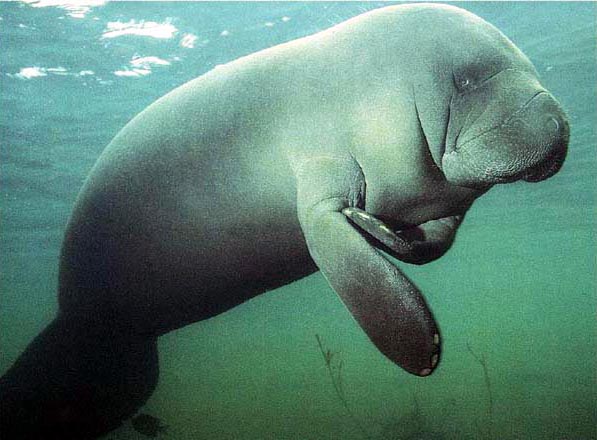
MIAMI -- Florida manatees are dying in record numbers and the lumbering marine mammals face growing threats from speedboats, a toxic foe called red tide and the potential loss of their warm winter havens at power plants.

So why is the U.S. government talking about removing its protective "endangered" label, conservationists ask.

"It's a concern because the mortality numbers are still so high," said Dr. Maya Rodriguez, a veterinarian at the Miami Seaquarium who treats sick and injured manatees. "All it might take is a few power plants to close or a really bad red tide to really hurt the population."

The U.S. Fish and Wildlife Service announced this week that the slow-moving West Indian manatee, one of the first creatures put on the U.S. endangered species list in the 1960s, no longer qualifies as endangered. That follows a similar move by Florida officials last year.

Wildlife officials say the manatee is not in immediate danger of extinction and its status should be changed to "threatened."

"We're not proposing to take it off the list, just change its status," said Dave Hankla, an FWS field supervisor. Changing the status could take several years.

A change from endangered to threatened would not diminish the manatee's protection, but advocates say it could be hurt by public perception that it is no longer in danger.

An annual census found 2,812 manatees in Florida this year, down from 3,113 in 2006. Reported deaths numbered 417 last year, the highest on record, and 101 died in the first three months of this year.

The West Indian manatee, related to the West African and Amazon versions and to the dugong of Australia, is a giant that grows to an average of 10 feet and more than 1,000 pounds. Its wrinkled and whiskered face, reproduced as a stuffed toy, has won the hearts of generations of children.

It has no natural predators. But its penchant for resting on the water's surface has made it a frequent victim of boat propellers.

Manatees are also routinely crushed or drowned in canal locks or hurt by stray fishing line and hooks. They are vulnerable to red tide algae blooms and to winter cold.

Their numbers have increased in the last 30 years, in part due to boat speed restrictions. Developers and boating groups argue for easing restrictions to allow more boat slip construction.

POWER PLANTS

But conservationists say the potential closure of aging electric plants is an unsolved problem for the survival of the species. Water temperatures below 61 degrees Fahrenheit put a manatee in danger and every winter hundreds gather at waterfront power stations to take advantage of warm discharge water.

Florida Power & Light, the state's largest electric company, has five plants that are refuges and as many as 1,500 manatees can be found at the plants on a chilly winter night.

"FPL has no plans to definitely close any of our power plants," said Winifred Perkins, FPL's manager of environmental relations. "But it's most people's opinion that most of these plants won't be around 50, 60, 70 years from now ... From the manatee's point of view, it's an acute issue."

A state task force is considering ways to create alternative warm-water winter homes for manatees.

Red tide, an algae bloom that scientists believe is toxic to manatees, has been blamed for large die-offs. One in 1996 killed about 150 manatees.

"Red tide is the big unknown right now," said Pat Rose, an aquatic biologist and executive director of the Save the Manatee Club. "We're still not sure how much of a risk red tide is. Is it getting worse or is it just killing more manatees?"

Source: Reuters