Saturday, 18 February 2023

Fiji Spartan Trifecta Week presented by Fiji Airways

SPARTAN’S IN FIJI
 
Exciting News! 

Spartan Race Australia, NZ & Fiji has launched Spartan Fiji today which will be held from 9 - 12 November 2023 in Sabeto, Nadi. 


Spartan are expecting between 2000-3000 participants to travel for the race, with many travelling in family or friendship groups.


THE RACES

Bula!

At Aviva Racecourse, also known as Sabeto Racetrack, racers will experience one of the most scenic, but challenging Spartan courses ever, as we access the steep Sabeto Mountain Track and the multiple surrounding trails. 

You will traverse through a number of traditional Fijian native villages, rain forest areas and tough and rugged mountain tracks. 

Your climbing will be rewarded with breath-taking views from the peak of the Sleeping Giants.

We're bringing you the greatest Spartan destination event ever held – with the support of the Fiji Government and Fiji Airways, the ingredients are now in place for an epic experience in one of the world’s most idyllic locations.

Run as a Team
By registering multiple racers on the order, you can save up to 15% on race fees. The more racers you register, the higher your discount. Find out more!

Friday, 10 February 2023

Savusavu Fiji Citizen Science Dive with Jean-Michel Cousteau Jan 2023


Bula! Dive in with Reef Ecologic Scientist, Julia Saper, and Jean-Michel Cousteau Resort Fiji divers as they conduct Coral Watch Surveys to measure the health of local reefs off of Savusavu, Fiji. Reefs are vitally important to the health of our planet and are especially important to small Pacific Island nations, such as Fiji. The Great Sea Reef of Fiji is the third longest, continuous barrier reef system in the world. Fijians epitomize a strong sense of connection to the reef as a source of cultural identity, sustenance and coastal protection. Through global citizen science efforts, and shared experiences on the reef, we are also reminded of how connected we are to eachother. For more information visit: Jean-Michel Cousteau Resort Fiji https://www.fijiresort.com/ Coral Watch https://coralwatch.org/ Reef Ecologic https://reefecologic.org/

Saturday, 24 September 2022

New FIJI DIVE EMERGENCY NOTES 2022 v2_0


New FIJI DIVE EMERGENCY NOTES 2022 v2_0

IF YOU HAVE A SUSPECTED DIVE INJURY/ ACCIDENT CALL

331 3444

THE SWITCHBOARD OPERATOR WOULD KNOW WHICH HYPERBARIC DOCTOR IS ON DUTY (CWM, SUVA)

Once retrieval for treatment is authorised, OCEANIA HOSPITALS should also be notified of an admission, if necessary:

Call Dr John Alfred

992 9541

IMPORTANT – YOU MUST PLACE THE PATIENT ON OXYGEN!

IF CONSTANT FLOW, MINIMUM 15 LITRES/MINUTE

IMMEDIATE CARE

In a suspected diving accident, the first question is ‘Did the victim take a breath underwater?’ from a SCUBA tank, hose, bucket, submerged car, or any compressed air source, regardless of depth.

If the answer is no, give CPR and oxygen if needed and evaluate at the nearest medical facility as the casualty is unlikely to require treatment by a diving medicine specialist.

If the injured diver did breathe underwater and only mild symptoms are present (fatigue and itching only), place the patient in the Recovery position if possible and administer oxygen and oral fluids while maintaining close observation for 30 minutes.  DO NOT GIVE ORAL FLUIDS TO PATIENTS SUFFERING DIZZINESS OR NAUSEA DUE TO POSSIBILITY OF VOMITING.

If these symptoms do not clear, “ACTIVATE THE HYPERBARIC CHAMBER ALERT”.

If the injured diver did breathe underwater and has serious symptoms, the Dive Operator must accompany the patient and do the following:

  1. Administer CPR if required with the victim lying flat on his/her back.
  2. Keep airway open and prevent aspiration of vomit. An unconscious diver should be intubated by trained personnel if possible.
  3. Administer oxygen by tight-fitting transparent double seal mask at the highest possible oxygen concentration. Do not remove oxygen except to re-open the airway or if the victim shows signs of convulsions.
  4. Keep victim in the Recovery position if symptoms occurred within 10 minutes of surfacing and steps 1-3 have been completed.
  5. If convulsion occurs do not forcefully restrain. Turn victim on side (supporting head and neck), maintain airway, sweep away any vomit.  Hold victim loosely to prevent self injury and do not forcefully insert any airway or tongue blade, resume oxygen administration.
  6. Protect the injured diver from excessive heat, cold, wetness, or noxious fumes.
  7. For conscious patients only, give conscious patients non-alcoholic liquids such as water or fruit juices.
  8. Call the CWMH – 3313444 and initiate Chamber Alert (see page 8). Hyperbaric Doctor: Dr Akuila Waqanicakau – 976 7267 may not always be available to take calls on the spot.
  9. If necessary, the Hyperbaric Doctor will advise Transport, then Evaluate and stabilize patient at the nearest Medical Centre/Hospital emergency room prior to transfer to the Hyperbaric Chamber Facility. ENSURE OXYGEN LEVELS ARE AT 15LITRES/MINUTE AND NOT DROPPED TO HOSPITAL NORMS FOR NON-DIVERS
  10. For Doctors or Paramedics only: Intravenous fluid replacement with electrolyte solutions is preferred for unconscious or seriously injured victims. Ringers lactate, normal saline, or 5% dextrose in saline may be used. Do not use 5% dextrose in water.  Intravenous fluid treatment requires professional care.  Do not attempt unless you have proper training.
  11. Should the patient be moved to a Medical Centre the Fiji Government Doctor will stabilize the patient, the Dive Operator must ensure communications are frequent to the Hyperbaric Doctor at the Hyperbaric Unit.
  12. When you initiated the Hyperbaric Chamber Alert, the Hyperbaric Unit will have put all personnel on a state of readiness i.e. The Chamber, Ambulances and the quickest method for MEDEVAC will be on standby readiness to depart. The Ministry of Health Doctor and Hyperbaric Chamber Doctor must authorize all patients (Fiji Citizens, Beche-de-mer Divers, Tourist/Recreational divers, staff, salvage and commercial dive companies) Medevacs, and treatment at the Hyperbaric Unit.
  13. The patient should remain on oxygen during transport to Hyperbaric Unit.
  14. If air evacuation is used, IT MUST BE ARRANGED BY THE HYPERBARIC UNIT.  It is critical that the patient not be exposed to decreased barometric pressure at altitude.  Flight crews must fly at the lowest safe altitude in un-pressurised aircraft.  CAAF have agreed 500 feet weather permitting.  It is essential that you the Operator personally ask the pilot to confirm he has been briefed on this critically important aspect.

Full document with reporting procedures and emergency contacts are accessible and downloadable here.

We recommend that all dive operators have a hardcopy of these notes printed and readily available on all dive vessels and offices.

 https://fhta.com.fj/about-fhta/fhta-subcommittees/dive-operators-subcommittee-divecomm/fiji-dive-emergency-notes/


Sunday, 28 August 2022

Marine Rescue Ambulance Update - August 2022

 Bula vinaka,

Hope this finds you well and in good spirits.


Further to our recent opening of our 600 square meter Emergency Medical Services Medic Centre facility located at level 1. Port Denarau Marina as mentioned over the past weeks please find the latest update on our Marine Rescue Ambulance.


Emergency Medical Services (Fiji) has just received delivery of its new purpose built medevac rescue boat named;  ‘’EMS Marine Rescue’’


The vessel is an aluminium single hull 7.8 metre boat powered by twin 175 HP 4 stroke Suzuki Outboards engines.

Currently the vessel is at Port Denarau Marina having the engines fitted & undergoing the final stages of the MSAF survey requirements.

Marine Rescue will be based at Port Denarau and operate  24/7


The vessel installations include:


·         AIS Radar, Satellite phones & internet, GPS tracking, High powered day/night search lights, FLIR Thermal imaging Camera

·         An extensive emergency trauma medical kit - Enclosed Cabin On Board stretcher - room for 3 patients to lay down and be treated

·         The latest digital diagnostic equipment- Portable X-Ray, Ultrasound, ECG, AED, LifePak, Vitals Monitor, Onboard & portable medical oxygen

·         Advanced drugs including inotropes, antiarrhythmics, sedatives and, neuromuscular blockers

·         Musculoskeletal - complete range of immobilisation and spinal equipment

·         Marine surf rescue kit

The boat has it's own trailer that allows the boat to be mobilised to any location site in Fiji for conferences, events and film production sites.

 Marine Rescue’s medical team will consist of EMS’s  doctors, emergency nurses and paramedics. 

Patients will be treated on-site and those requiring emergency treatment or surgery will be stabilised then transferred to the appropriate medical facility. 

Tourism operators will need to pre-register for the service via our website portal.

EMS will then discuss the service level required and implement an SOP ensuring timely response times . 

During the first weeks of September, Marine Rescue will be undergoing sea trials and may be available to visit your location or organise to set up the services we offer.

Please Call me 222 0909 to check availability


Best regards,


Graeme Hedge

CEO – Paramedic

Helipro (Fiji) Pte Limited


Saturday, 23 May 2020

Beqa Adventure Divers Are Running Commercial Dives Again


Although Fiji's borders remain closed we can see a tiny light at the end of the tunnel.

The Marine Safety Authority has lifted the ban on marine clearances, and so we can now run commercial dives.  However without a constant influx of tourists, this means very little in the grand scheme of things, but we are focusing now on serving our local dive community.  We are very fortunate to be in a financial position to weather the storm of this pandemic.
 
For the last 2 months we have been running staff only dives: feeding the sharks, and conducting a portion of our current scientific research.  Additionally we are monitoring and enforcing the marine park by running anti-poaching patrols.  Having retained a majority of our staff, we continue to pay reduced wages.

International tourism will eventually resume, and in expectation of the re-opening of our sector, we would like to offer you an opportunity to purchase your next dives with us at exclusive and deeply discounted rates. 
 
This clients-only special would grant us a boost in terms of cash injection whilst giving you a nice savings which you can use for other adventures on your next trip to Fiji.
Beqa Adventure Divers


We believe that this offer is too good to miss, and hope you will consider it.

If so, please feel free to contact us for orders, but also for any questions and/or suggestions as we greatly value your feedback.
 
We look forward to hearing from you soon.  In the meantime, we send you our very best wishes during these difficult times.
 
Kindest Regards, 
Mike, Andrew & Natasha
Directors, Beqa Adventure Divers

How does it work?

  • Contact Us 
  • Purchase Your Dive Vouchers.
  • Save Your Vouchers or Gift them to Someone Special
  • Plan Your Vacation 
  • Book Your Dives
Your Adventure Begins !

Tuesday, 12 May 2020

The importance of the Great Sea Reef

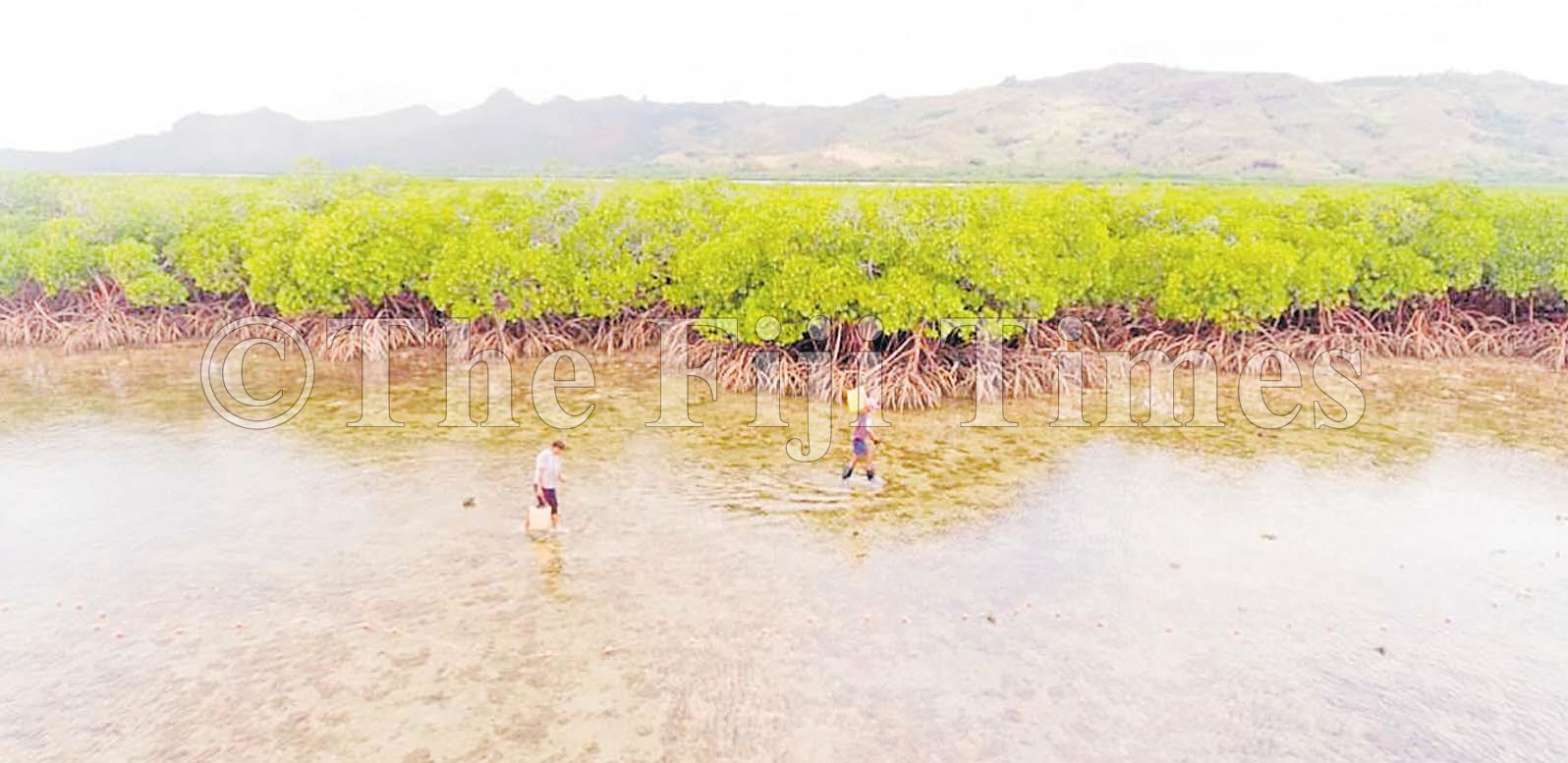
Mangrove patch area in Qoliqoli Cokovata. In 2018, the Fiji Government designated Qoliqoli Cokovata of the Great Sea Reef as a wetland of International Importance under the Ramsar Convention. Picture: WWF-PACIFIC

THE Great Sea Reef (GSR) is the third-longest barrier reef system in the world spanning more than 200km from Udu point all the way to the Yasawa and Mamanuca Islands weaving its way towards the Coral Coast.

This reef system provides about 70 per cent of fish consumed locally and is an important tourist destination.

In Fiji, WWF’s focus is on protecting and conserving Fiji’s Great Sea Reef, a living icon for Fiji.

WWF-Pacific Great Sea Reef program manager Alfred Ralifo said WWF works with many stakeholders and partners to sustainably manage and protect GSR.

“As we use many conservation tools, lessons from other parts of the world and liaising with all partners and stakeholders, equal and inclusive participation in decision-making processes, facilitate good scientific surveys and research work to inform planning and policy, awareness and campaigns and promote and encourage the use of traditional knowledge and practices,” he said.

“Overall it’s about collaboration and inclusivity.”

The GSR is important to the people of Fiji and the Pacific and it’s under enormous threats and pressure.

“If we do not do anything about it then we are going to lose this reef system in the near future.

“The GSR is important to not only sustaining Fiji’s economy at the national level, but also at the grass-roots level. It is important for food and nutritional security for adaptation and building resilience to climate change. It’s an integral part of Fiji’s culture and identity.”

The GSR faces many threats from pollution, unsustainable agriculture and forestry (soil erosion, use of chemical pesticides and weedicides and deforestation), unsustainable tourism, unsustainable fishing, shipping industry, urban expansion – clearing of mangroves and coastal vegetation, waste water from factories and sewages.

“All these threats are compounded by the impacts of climate change – ocean acidification, overheating of the sea, sea-level rise, storm surges, hurricanes, etc.,” he said.

“If we do not protect and address these multiple threats we are going to lose this very important reef system including the fish and other sea creatures (corals, turtles, sharks, rays, shellfish, etc.) which are important to us.

“We won’t be able to protect ourselves against the impact of climate change. Our Fijian economy will be affected because we will lose our tourists and our fishing industry will collapse. Health and nutrition will also be a problem and incidents of poverty will rise.”

He said their work in Fiji and the Pacific was a small component of a larger movement across the globe where people are recognising that business, as usual, was creating more problems for the planet and for the people and benefitting the elite few.

“Business, as usual, is destroying the health of our planet earth, destroying our oceans, our rivers, our forest, our soil, the air we breathe and biodiversity. “Business, as usual, is making the rich richer and the poor, poorer.”

He said they are working with all stakeholders of the Great Sea Reef through fundraising, capacity building, and consultation and promoting sustainable and regenerative practices.

“We are creating awareness and advocating for policy change to ensure that there are enabling mechanism to support sustainable blue-green economies that are inclusive, transparent, focusing on the most vulnerable groups and communities first.

“We are creating awareness and ensuring that everyone has the ability to make informed decisions on how they should manage and sustainably use their natural resources.

“We are working to support the Fijian government in implementing its international commitments such as the sustainable development goals, the Paris Agreement and Convention of Biological Diversity, UN Oceans Conference to name a few.”

In 2018, Government had designated the Qoliqoli Cokovata of the Great Sea Reef as the wetland of international importance under the Ramsar Convention.

“WWF-Pacifi c (my team and I) collaborated with the Fiji Government and with the traditional owners of Qoliqoli Cokovata of Macuata – the Tui Macuata and the people of Macuata, Sasa, Dreketi and Mali – to ensure that we complete the Ramsar designation process,” he said.

Qoliqoli Cokovata(QC) is now Fiji’s first coral reef Ramsar site which means that Government and the people of the Qoliqoli Cokovata are committed to ensuring that the QC is managed sustainably and used wisely.

Qoliqoli Cokovata Ramsar Site is a gift from the Tui Macuata and the people of Macuata, Dreketi, Sasa and Mali to the people of Fiji and the world.

https://www.fijitimes.com/the-importance-of-the-great-sea-reef/

Thursday, 30 April 2020

New Advice Cautions Against Rushed Return to Diving for Coronavirus Patients

coronavirus lungs title

Coronaviruses attack the respiratory system, and SARS-CoV-2 can cause serious damage to the lungs

The Coronavirus pandemic has already had a devastating impact on the scuba diving world – but there's another question on divers' minds: 'What happens if I get it? Can I dive after COVID-19?' And the answer is not straightforward.

An article published in the German magazine Wetnotes (click here for a Google Translated English version) on 15 April gives an insight into the medical problems that scuba divers who have contracted SARS-CoV-2 might face. In it, Dr Frank Hartig, a senior consultant and response crisis coordinator/disaster officer for SARS-CoV-2 at Innsbruck University Hospital in Austria – and a scuba diver himself – describes some of the problems he has already encountered as a physician.

The acronym SARS – as in SARS-CoV-2, the official name of COVID-19 – stands for Severe Acute Respiratory Syndrome. SARS attacks the lungs, and while research into the long-term effects of the novel coronavirus is only just beginning, its physical impacts are all too tragically well known. Lung damage caused by conditions such as pneumonia and acute respiratory distress syndrome (ARDS) has been widely reported. It is also known to attack other organs, including the heart, although cardiac damage may go unnoticed until the heart is actually checked. Although we might not know much about the coronavirus itself, it has long been established that scuba diving with a compromised cardiopulmonary system can lead to serious injury, even death.

In his article, Dr Hartig describes his involvement with six active scuba divers who were hospitalised with conditions brought on by SARS-CoV-2 and who subsequently recovered and were discharged. When they returned for a check-up several weeks later, they all outwardly appeared to be healthy, but a closer examination proved otherwise.

pulmonary oedema image

A build-up of fluid in the lungs can lead to the body being starved of oxygen

'The first checks of these six divers, who came to the check-up clinically healthy after 5 to 6 weeks, are interesting,' writes Dr Hartig (translated from German). 'In two of them, we saw significant oxygen deficiency when under stress as a typical sign of a persistent pulmonary shunt. In two others, bronchial tubes were still very irritable during exercise, as in asthmatics. Four of the six divers in the check-up CT [scan] still had significant lung changes. None of the six divers can be released for diving for the time being, despite their wellbeing.'

Exercise-induced asthma is a well-known contraindication to diving, and in layman's terms, a pulmonary shunt is when blood fails to pick up more oxygen as it passes through the lungs, which leads to the body being starved of oxygen. It is often caused by fluid in the lungs, also the result of pneumonia and pulmonary oedema, a condition becoming widely recognised as a leading cause of diver fatalities. 

At this stage, any questions over long-term damage to the lungs caused by SARS-CoV-2 would be entirely speculative, but it is clear from Dr Hartig's assessment that divers who have been affected by the coronavirus should not dive until they have had a thorough medical examination – even if they otherwise appear healthy. As Dr Hartig notes, if proper precautions are not taken, 'Young, COVID-healthy people who want to dive again quickly and appear healthy at first could [slip through our fingers].'

A report published on 12 April by the Belgian Society for Diving and Hyperbaric Medicine gives advice to scuba divers who may have contracted and recovered from Covid-19 based on current medical knowledge. To summarise, the report states that:

  1. Risk of Infection: Someone who has been infected with COVID-19 can still spread the virus to others. In a diving context that would be especially likely when conducting air sharing or rescue training exercises. Before returning to diving, divers should, therefore:
    • Wait a minimum of two, preferably three months, if they had symptoms of the virus 
    • Wait a minimum of one month if they tested positive for the virus but were asymptomatic.
    • Those who have not been tested and never had symptoms may still be susceptible to infection and should 'observe a waiting period' after lockdowns are lifted, which may be variable depending on location and type of diving.
    • Divers and dive centres should strictly observe guidelines for gear disinfection as distributed by DAN

  2. Risk of Pulmonary Barotrauma: People who have had COVID-19 may have significant damage to their lungs for an unknown period of time, possibly permanently, and therefore have an increased risk of pulmonary barotrauma – or lung overexpansion injury – even if they don't make rapid, breath-holding ascents. A diver who was hospitalised with lung-related problems should wait at least three months and undergo complete pulmonary function testing and a high-resolution CT scan of the lungs before returning to diving. Divers who had lung-related symptoms but were not hospitalised are still strongly recommended to have the test.

  3. Risk of Cardiac Events: Damage to the heart caused by COVID-19 may go unnoticed during the acute phase of the disease, but may lead to heart failure during diving. Therefore, it is recommended that a diver who was hospitalised with cardiac or pulmonary symptoms should, after the three-month waiting period, undergo a thorough cardiac evaluation with echocardiography and exercise testing (exercise electrocardiography – sometimes called the 'stress test'). Those who had symptoms but were not hospitalised are strongly advised to have the tests as well.

  4. Pulmonary oxygen toxicity: It appears that some COVID-19 patients' symptoms worsened after being given pure oxygen. Although little is known about an increased pulmonary sensitivity to oxygen, the report suggests it would be 'prudent' to avoid technical diving involving the prolonged breathing of hyperoxic gas with a pO2 of 1.3 ATA or higher. Simple nitrox diving (maximum pO2 of 1.4 ATA) should not present any problem.

  5. Decompression illness: tiny bubbles of inert gas form even on normal dives and are safely eliminated through the lungs during breathing. However, damage to the lungs may prevent the lungs' 'bubble filter' from working and lead to an arterial gas embolism or other form of decompression illness. Ddivers who have suffered from pulmonary symptoms of COVID-19 should, therefore, remain well within the no-decompression limits of their dives.

Click here for the full report (available in French, Dutch and English)

A complete assessment of the problems that divers might face following a COVID-19 / SARS-CoV-2 infection is undoubtedly many months away and, as Dr Hartig notes, any long-term medical advice will remain speculative until clinical trials have been conducted. 

In the short-term, however, the advice is clear. SARS-CoV-2 can damage the lungs and the heart. Scuba diving with damage to any part of the cardiovascular system can lead to serious injury and death. Much as we might all wish to rush back into the water as soon as we can, doing so without proper medical consideration may cause more harm than good.


Tuesday, 10 March 2020

The Famous Ane of "Ane's Bommie" fame on the Rainbow Reef Taveuni FIJI

Still diving in 2020, over 30 years of experience!
The Famous Ane of "Ane's Bommie" fame on the Rainbow Reef Taveuni FIJI


Monday, 24 February 2020

Fiji's Underwater Paradise

Volivoli Beach Resort was absolutely amazing

The views, grounds, and rooms were stunningly gorgeous! Nick, Steve, Simon and the entire Staff also did an outstanding job of taking care of our large group during the ScubaBoard Invasion 2019.

Ra Divers were on site for our diving and snorkeling

All we can say is what a pleasure with attention to detail from start to finish. The dive sites were healthy and absolutely beautiful! The famous Bligh waters were just gorgeous, with such a variety of animals and the soft coral was absolutely exquisite!


Here are some of the images captured while diving in your beautiful waters.
Vinaka to our friends till we see you again!
Dennis and Roxanne Harmon, Florida USA


https://www.youtube.com/watch?v=_Dqf854yj6Y&feature=youtu.be


Thursday, 31 October 2019

Sea Snake eating Moray Eel, Fiji (Laticauda colubrina vs. Gymnothorax sp.)

The banded snake krait (Laticauda colubrina) videotaped feeding on an eel (Gymnothorax sp.) in Fiji. Location was a patch reef off Pacific Harbour at a depth of about 30'. The krait had already killed the eel and was swallowing it when my wife, Marj Awai, found it.

Bruce Carlson video.

[taxonomy:binomial=Laticauda colubrina]
SHOW LESS
42