Showing posts with label Reef. Show all posts

Saturday, 23 May 2020

Beqa Adventure Divers Are Running Commercial Dives Again


Although Fiji's borders remain closed we can see a tiny light at the end of the tunnel.

The Marine Safety Authority has lifted the ban on marine clearances, and so we can now run commercial dives.  However without a constant influx of tourists, this means very little in the grand scheme of things, but we are focusing now on serving our local dive community.  We are very fortunate to be in a financial position to weather the storm of this pandemic.
 
For the last 2 months we have been running staff only dives: feeding the sharks, and conducting a portion of our current scientific research.  Additionally we are monitoring and enforcing the marine park by running anti-poaching patrols.  Having retained a majority of our staff, we continue to pay reduced wages.

International tourism will eventually resume, and in expectation of the re-opening of our sector, we would like to offer you an opportunity to purchase your next dives with us at exclusive and deeply discounted rates. 
 
This clients-only special would grant us a boost in terms of cash injection whilst giving you a nice savings which you can use for other adventures on your next trip to Fiji.
Beqa Adventure Divers


We believe that this offer is too good to miss, and hope you will consider it.

If so, please feel free to contact us for orders, but also for any questions and/or suggestions as we greatly value your feedback.
 
We look forward to hearing from you soon.  In the meantime, we send you our very best wishes during these difficult times.
 
Kindest Regards, 
Mike, Andrew & Natasha
Directors, Beqa Adventure Divers

How does it work?

  • Contact Us 
  • Purchase Your Dive Vouchers.
  • Save Your Vouchers or Gift them to Someone Special
  • Plan Your Vacation 
  • Book Your Dives
Your Adventure Begins !

Saturday, 5 May 2007

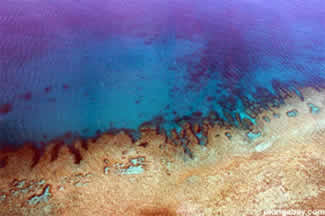
Indonesia Quake Caused Huge Coral Die-Off


April 12, 2007 — By Reuters

JAKARTA -- A strong earthquake that struck Indonesia's Sumatra island two years ago caused one of the biggest coral die-offs ever documented, a study by scientists from two conservation groups found.

The quake itself killed nearly 1,000 people on Nias island off the western coast of Sumatra island.

The scientists, who surveyed 35 sites on the coastline, found that the earthquake had raised the island of Simeulue near Nias by up to 1.2 metres (3 ft 11 in), exposing most of the coral reefs ringing the island over about 300 km (190 miles) of sea floor, a news statement said.

The scientists were from the U.S.-based Wildlife Conservation Society and the government-backed Australian Research Council Centre of Excellence for Coral Reef Studies (ARCCoERS).

"This is a story of mass mortality on a scale rarely observed," said Dr Stuart Campbell of the Wildlife Conservation Society's Indonesia marine programme.

"In contrast to other threats like coral bleaching, none of the corals uplifted by the earthquake have survived," he said.

Campbell said, however, that some sites in Simeulue were now recovering.

"At many sites, the worst affected species are beginning to recolonise the shallow reef areas. The reefs appear to be returning to what they looked like before the earthquake, although the process may take many years," he said.

Dr Andrew Baird of ARCCoERS said the earthquake had provided a one-off chance to study such a phenomenon.

"This is a unique opportunity to document a process that occurs maybe once a century and promises to provide new insights into coral recovery processes that until now we could only explore on fossil reefs."

The team said it had documented, for the first time in Indonesian waters, extensive damage to reefs caused by the crown-of-thorns starfish, a coral predator that has inflicted huge damage on reefs in Australia and other parts of the world.

"People monitoring Indonesian coral reefs now have another threat to watch out for, and not all reef damage should be immediately attributed to human influences," said Baird.

Indonesia has some of the richest reef environments in the world, but many have also suffered from human interference.

The government has banned the use of chemicals such as cyanide and bombing to catch fish, but such practices still go on in many parts of the huge tropical nation made up of more than 17,000 islands.

Source: Reuters